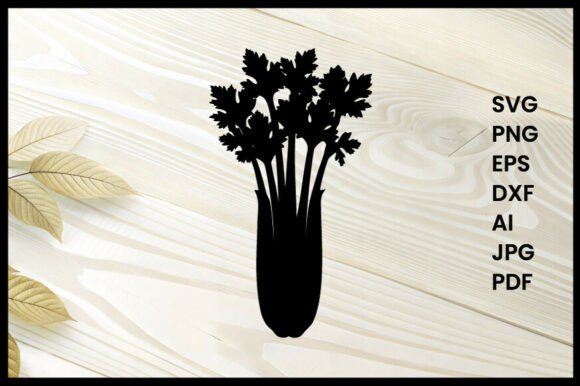
Celery Silhouette Illustration
As an embroidery designer and product reviewer, I’ve evaluated countless designs for real-world use. The Celery Silhouette Illustration caught my attention not just for its visual appeal but for its practicality in a range of projects. Whether you're creating custom apparel, personalized gifts, or small business merchandise, this design has potential—but it also comes with considerations that every embroiderer should be aware of.
First Impressions: A Clean, Culinary-Inspired Design
The Celery Silhouette Illustration immediately evokes a sense of simplicity and freshness. The clean lines and minimal detail make it ideal for a modern, health-conscious aesthetic. The silhouette of celeriac with green leaves is both recognizable and versatile, fitting well into themes around culinary arts, healthy eating, and organic living.
Its layout is straightforward, making it easy to adapt for different applications. The shape is symmetrical enough to work on a variety of surfaces without distortion. However, the lack of intricate details means it’s best suited for designs where clarity and legibility are more important than fine artistry.
Real-World Embroidery Use Cases
Imagine you’re designing a custom tote bag for a client who runs a wellness blog. The Celery Silhouette Illustration would serve as a subtle yet meaningful emblem. It could be stitched onto a cotton canvas tote using a satin stitch for a smooth finish. The design’s simplicity ensures it doesn’t overwhelm the fabric, and the bold outline makes it visible from a distance.
For baby items, such as onesies or burp cloths, the illustration works well as a gentle, non-distracting motif. It’s not too busy, which is essential when designing for infants. The same applies to aprons, kitchen towels, and pillow covers—products where the design needs to blend with the overall decor without competing with it.
As a machine embroidery design, the Celery Silhouette Illustration can be used in a variety of formats, including applique and fill stitches. Its structure allows for easy customization, whether you're adjusting size or color. But keep in mind that the design’s effectiveness depends heavily on how it’s applied and the materials used.
Where to Be Careful: Practical Limitations
While the Celery Silhouette Illustration is visually appealing, it’s not without limitations. For instance, if you're working with small hoop sizes, the design might not fit comfortably. This could lead to stitching issues, especially if the design requires precise placement.
On textured fabrics or thin materials, the design may lose some of its definition. Stretchy or dark fabrics can also affect how the silhouette appears. If you're planning to use it on a black t-shirt, for example, you’ll need to ensure the thread color contrasts sufficiently to maintain visibility.
Curved surfaces like caps or hoods can pose challenges. The design may stretch or distort if not properly adjusted. Similarly, products that require frequent washing, such as baby clothes or dish towels, demand a sturdy stitch density and proper stabilizer to prevent fading or distortion over time.
Impact on Visual Appeal and Customer Perception
The Celery Silhouette Illustration adds a touch of sophistication to any project. When stitched correctly, it enhances the visual appeal of custom apparel and handmade products. Its clean lines and minimalist style make it a strong choice for boutique branding or digital product previews.
From a customer perspective, the design feels professional and intentional. It conveys a sense of care and quality, which is essential for handmade or personalized gifts. For Etsy sellers or craft business owners, this design can elevate the perceived value of their offerings, making it a smart addition to your design assets.
However, the success of the design also depends on how well it’s presented. A poorly executed embroidery job, even with a great design, can turn off potential buyers. That’s why testing the design on scrap fabric before committing to a final project is always a good idea.
Embroidery Designer Notes: What to Check Before Using
Before incorporating the Celery Silhouette Illustration into your work, there are several practical steps to take:
- Test on scrap fabric: Always try the design on a sample piece to see how it looks in real life.
- Check thread color contrast: Ensure the thread color complements the fabric and stands out clearly.
- Review stitch density: Adjust the density based on the fabric type to avoid puckering or distortion.
- Confirm hoop size: Make sure the design fits within your hoop dimensions for smooth stitching.
- Inspect small details: Pay attention to corners and edges, especially if the design includes delicate elements.
- Test in black and white mockups: This helps visualize how the design will look on different backgrounds.
- Compare light and dark fabric: Some designs may look better on one than the other, depending on the thread color.
- Use proper stabilizer: Stabilizers help maintain the integrity of the design, especially on stretchy or thin fabrics.
- Check licensing: Confirm that the design is suitable for both personal and commercial use before selling finished items or digital products.
Final Thoughts: A Versatile, Practical Design
The Celery Silhouette Illustration is a solid choice for embroidery designers looking for a clean, adaptable design. It works well across a range of applications, from custom apparel to personalized gifts. However, its effectiveness depends on how it's applied and the materials used.
If you're an Etsy seller, a small shop owner, or a craft entrepreneur, this design can be a valuable addition to your collection. Just remember to test it thoroughly, consider the fabric and stitch requirements, and ensure it aligns with your brand’s aesthetic.
Ultimately, the Celery Silhouette Illustration is a design that rewards thoughtful application. With the right approach, it can become a standout element in your embroidery projects and a reliable asset for your creative business.